
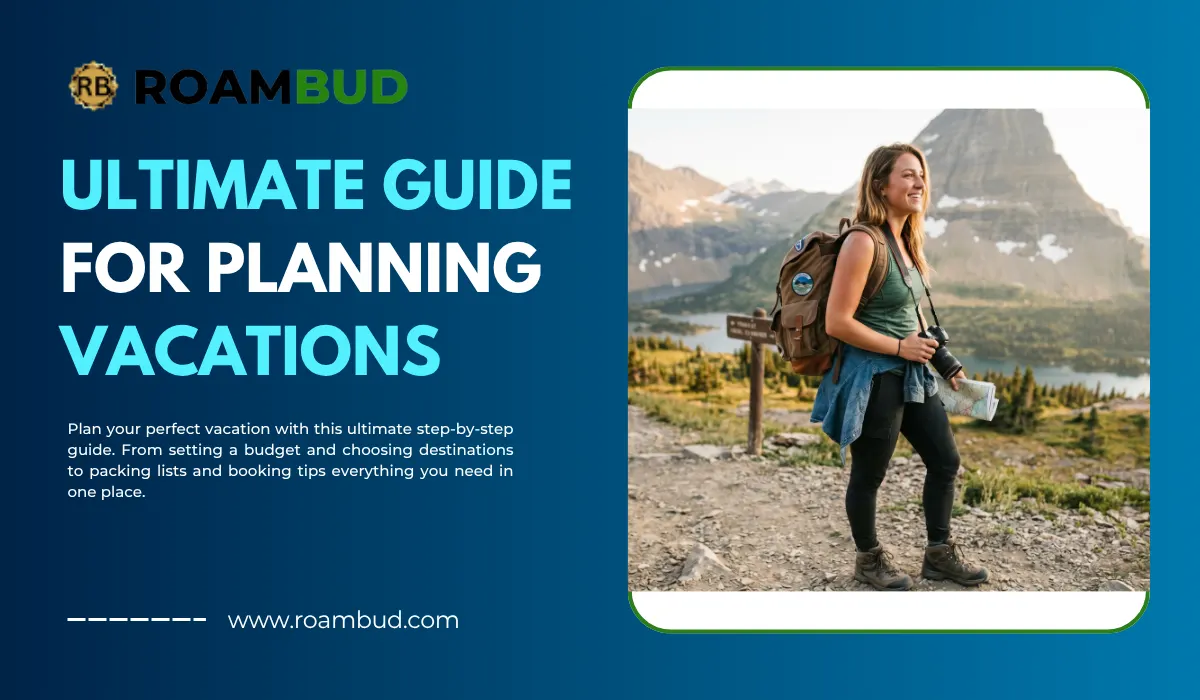
According to the World Travel & Tourism Council, global tourism generated over $9.9 trillion in 2024. Yet 67% of travelers say poor planning ruined at least one trip. This guide ensures you are not one of them. Whether you are planning a romantic honeymoon in Santorini, a family road trip across the United States, or a solo backpacking adventure through Southeast Asia, one truth applies universally: great vacations are built before you board the plane. This ultimate vacation planning guide walks you through every step — from setting a travel budget to packing the perfect bag — so you can travel confidently, affordably, and without regret.
1. Define Your Vacation Goals and Travel Style

Before opening a single booking website, ask yourself: What do I actually want from this trip?
Vacation goals shape every decision that follows. A relaxation-focused beach holiday has a completely different planning path than an adventure travel itinerary packed with hiking, rafting, and wildlife safaris.
Common travel styles to identify:
- Relaxation travel — beach resorts, spa retreats, all-inclusive packages
- Adventure travel — trekking, scuba diving, extreme sports destinations
- Cultural tourism — historical sites, local food experiences, museums
- Family travel — kid-friendly destinations, theme parks, short flights
- Solo travel — safety-first destinations, hostel stays, flexible itineraries
- Budget travel — cheap flights, free attractions, budget accommodation
Writing down your goals in a travel journal or a simple notes app gives your trip a clear direction and helps you avoid expensive mistakes later.
2. Set a Realistic Travel Budget (And Stick to It)
Money is the number one reason vacations get cancelled or cut short. A solid travel budget covers five core categories:
| Category | Estimated % of Total Budget |
|---|---|
| Flights / Transport | 30–40% |
| Accommodation | 25–35% |
| Food & Dining | 15–20% |
| Activities & Attractions | 10–15% |
| Emergency / Miscellaneous | 5–10% |
Pro tips for budget travel planning:
- Use tools like Google Flights, Hopper, or Skyscanner to track airfare and set price alerts.
- Book accommodation on Booking.com, Airbnb, or Hostelworld depending on your travel style.
- Always add a 15% buffer to your estimated budget. Unexpected costs — visa fees, taxi rides, medical needs — always appear.
- Travel during the shoulder season (the weeks just before or after peak tourist months) to save 20–40% on flights and hotels.
Personal tip from experience: On a 10-day trip to Bali in 2023, booking flights 8 weeks in advance and choosing a local guesthouse over a resort saved over $600 — money that went directly into unforgettable food tours and a sunrise hike up Mount Batur.
3. Choose the Right Destination

Picking the best vacation destination is about matching a place to your goals, budget, and available time — not just following trends.
Key factors when choosing a travel destination:
- Visa requirements — check if you need a tourist visa and how far in advance to apply
- Best time to visit — research the destination's climate and peak vs. off-season travel windows
- Safety index — consult the U.S. State Department or your country's foreign travel advisories
- Travel distance — a 14-hour flight for a 5-day trip is rarely worth it
- Local culture — research customs, dress codes, and cultural etiquette before you go
Top destination categories by travel goal:
- Best for families: Orlando (USA), Tokyo (Japan), Gold Coast (Australia)
- Best for couples: Paris (France), Maldives, Tuscany (Italy)
- Best for solo travelers: Lisbon (Portugal), Bangkok (Thailand), Medellín (Colombia)
- Best budget destinations: Vietnam, Georgia (Caucasus), Albania, Sri Lanka
- Best adventure destinations: Patagonia, Nepal, Iceland, New Zealand
4. Plan Your Travel Dates Strategically
Timing your trip correctly can save you hundreds of dollars and dozens of hours in frustrating crowds.
Best practices for choosing travel dates:
- Fly on Tuesdays and Wednesdays — statistically the cheapest days to book flights in most markets
- Avoid school holiday windows — spring break, summer (June–August), and Christmas periods drive prices up by 30–80%
- Check local festivals — some destinations are magical during festivals (Diwali in India, Carnival in Brazil) but hotels book out a year in advance
- Allow buffer days — always add a recovery day at each end of your trip for travel delays and jet lag
A great trip itinerary planner tool is TripIt or Google Trips, which help you organize flights, hotels, and activities into a single timeline.
5. Book Flights and Accommodation the Smart Way

This is where most travelers either save or waste money. Here is a proven booking sequence:
Step-by-step booking strategy:
- Set fare alerts on Google Flights and Kayak at least 8–12 weeks before departure
- Book flights first — dates are fixed once you have tickets, which forces productive decisions on accommodation
- Choose accommodation by location, not just price — a cheaper hotel 45 minutes from the city center often costs more in taxi fares
- Read recent reviews — look at reviews from the past 3 months, not the overall score
- Use a credit card with travel rewards — many cards offer points, lounge access, and trip cancellation insurance
Types of accommodation to consider:
- Hotels — best for comfort, reliability, and business travel
- Vacation rentals (Airbnb, Vrbo) — ideal for families and long stays
- Hostels — perfect for solo budget travel and meeting other travelers
- Boutique guesthouses — often the best value and most authentic experience
6. Build a Day-by-Day Trip Itinerary
A loose itinerary prevents decision fatigue on vacation without removing spontaneity. Aim for a structure, not a rigid schedule.
Itinerary planning tips:
- Plan 2–3 anchor activities per day, leaving the rest flexible
- Group activities by location — don't bounce across a city when you can cluster nearby sights
- Research opening hours and booking requirements — many popular sites (Machu Picchu, Vatican Museums) require advance tickets
- Build in rest time — the biggest mistake travelers make is over-scheduling. Fatigue ruins even the best itinerary
- Download offline maps — Google Maps allows offline downloads. This is essential in destinations with poor connectivity
A good rule of thumb: spend at least 2 nights in any one place. One-night stays mean you spend most of your time checking in and out instead of actually exploring.
7. Handle Visas, Travel Documents, and Insurance
Nothing derails a trip faster than missing paperwork. Start this process the moment you have booked your flights.
Pre-travel checklist:
- Passport valid for at least 6 months beyond your return date
- Visa applied for (if required) — allow 4–8 weeks for processing
- Travel insurance purchased — covers medical emergencies, cancellations, and lost luggage
- Copies of all documents (passport, insurance, itinerary) stored in email and cloud
- Vaccinations up to date — check CDC or WHO recommendations for your destination
- Local emergency numbers saved to your phone
- Notify your bank of travel dates to prevent card blocks
Travel insurance is non-negotiable. A single medical evacuation abroad can cost $50,000–$200,000 without coverage. Providers like World Nomads, Allianz Travel, and SafetyWing offer affordable options for most travelers.
8. Create the Perfect Packing List

Over-packing is one of the most common travel mistakes. A good packing list focuses on versatility and necessity.
Universal packing essentials:
Documents & money:
- Passport, visa, travel insurance card
- Local currency + travel debit/credit card
- Physical copies of all bookings
Clothing:
- Pack for the weather, not for every occasion
- Choose fabrics that dry fast and resist wrinkles
- Follow the 5-4-3-2-1 rule: 5 socks, 4 tops, 3 bottoms, 2 shoes, 1 jacket
Health & safety:
- First aid kit with pain relievers, antihistamines, and digestive medication
- Sunscreen (SPF 50+), insect repellent, hand sanitizer
- Prescription medications with a doctor's letter
Tech:
- Universal travel adapter
- Portable power bank
- Offline maps downloaded
Golden rule: If your bag does not fit in the overhead bin, it is too heavy.
9. Manage Money and Stay Safe While Traveling
Smart money management abroad:
- Use a no-foreign-transaction-fee card (Charles Schwab, Wise, or Revolut are popular options)
- Withdraw local currency from ATMs inside banks, not on the street
- Never carry all your cash in one place — split it between wallet, bag, and hotel safe
- Use XE.com to check real-time exchange rates so you are never shortchanged
Safety tips for international travel:
- Register with your country's embassy travel program (e.g., STEP program for U.S. citizens)
- Share your itinerary with a trusted contact at home
- Use hotel safes for passports and extra cash
- Trust your instincts — if a situation feels unsafe, leave immediately
10. Make the Most of Your Vacation Once You Arrive
Planning is the foundation, but how you show up during the trip determines the memories you bring home.
On-ground travel habits of experienced travelers:
- Wake up early — the first two hours after sunrise at any major attraction are crowd-free and magical
- Eat where locals eat — skip the tourist-trap restaurants directly beside major sights
- Learn 10 phrases in the local language — effort is universally appreciated and often rewarded
- Stay present — put the phone down more than you think you need to
- Keep a travel journal — even five sentences a night helps you remember the trip in vivid detail for years
Frequently Asked Questions About Vacation Planning
Q: How far in advance should I plan a vacation?
For international trips, 3–6 months ahead is ideal. Domestic trips can often be planned 4–8 weeks out. Popular destinations during peak season may require 6–12 months of lead time, especially for accommodation.
Q: What is the cheapest way to book flights?
Use Google Flights with flexible date search, set fare alerts, book on Tuesdays or Wednesdays, and fly during shoulder season. Avoid booking less than 3 weeks before departure, as prices spike significantly.
Q: Do I really need travel insurance?
Yes. Travel insurance is one of the most important and cost-effective purchases in vacation planning. A basic policy for a 10-day international trip typically costs $30–$80, and it can save thousands in medical or cancellation costs.
Q: How do I plan a vacation on a tight budget?
Focus on budget-friendly destinations, travel during off-peak periods, use flight comparison tools, choose hostels or vacation rentals over hotels, cook some meals yourself, and prioritize free attractions like parks, markets, and walking tours.
Q: How do I plan a family vacation with kids?
Choose kid-friendly destinations with short travel times, book direct flights where possible, plan activities that interest children, bring entertainment for travel days, pack snacks, and ensure accommodation has family-friendly amenities. Keep the itinerary light — less is more with young children.
Q: What are the best apps for vacation planning?
Google Flights (airfare), Airbnb or Booking.com (accommodation), TripIt (itinerary management), XE Currency (exchange rates), Google Maps offline (navigation), and TripAdvisor (activity reviews) are the most reliable tools used by experienced travelers worldwide.
Final Thoughts: Your Dream Vacation Is One Good Plan Away
Vacation planning is not about perfection — it is about preparation. The travelers who have the best experiences are not the ones with the most money or the most exotic destinations on their list. They are the ones who took the time to research, budget honestly, pack light, and stay open to the unexpected.
Use this vacation planning guide as your starting point. Return to it each time you plan a new trip, and add your own hard-won experience to the mix. Over time, you will develop your own rhythm — and travel will stop feeling stressful and start feeling like the adventure it is meant to be. Safe travels. The world is waiting for you.
About the Author: Richard William is a seasoned travel writer and vacation planning expert with over a decade of hands-on experience exploring destinations across six continents. He has contributed travel guides, destination reviews, and planning resources to leading travel publications and blogs worldwide. Richard specializes in budget travel, family vacation planning, and sustainable tourism helping everyday travelers turn dream trips into stress-free realities.